
Achilles Tendinopathy
Pain, stiffness, or swelling in the Achilles tendon caused by overuse, strain, or degeneration.
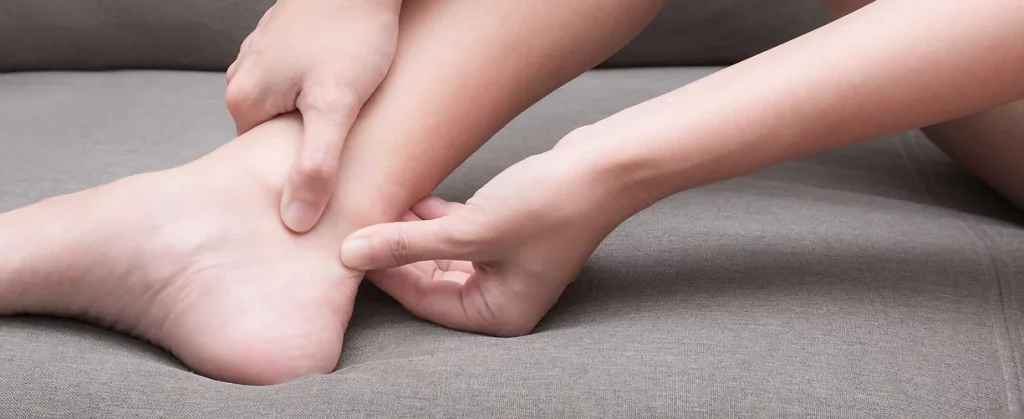
What is Achilles Tendinopathy?
Achilles tendinopathy is a condition where the Achilles tendon — the thick band connecting the calf muscles to the heel bone — becomes inflamed, irritated, or weakened.
It commonly affects active individuals but can occur in anyone due to overuse, sudden activity increase, or age-related wear.
There are two main types:
Insertional Achilles Tendinopathy: Affects the tendon where it attaches to the heel.
Non-insertional Achilles Tendinopathy: Affects the middle part of the tendon.
Symptoms
Pain and stiffness at the back of the heel
Pain during the first steps in the morning
Tenderness along the tendon
Swelling or thickening of the tendon
Pain that worsens with activity
Tight calf muscles
Difficulty running or climbing stairs
Causes
Achilles tendinopathy usually results from repetitive stress or sudden overload on the tendon. Contributing factors include:
Overuse from running or high-impact sports
Sudden increase in exercise intensity
Wearing unsupportive or worn-out footwear
Tight calves or limited ankle mobility
Flat feet or high arches
Aging and tendon degeneration
Previous Achilles injuries
Who is at Risk?
Runners and athletes
Middle-aged individuals
People with foot alignment issues
Those who stand or walk for long hours
Individuals who restart exercise after long breaks
People with obesity or metabolic conditions
How We Diagnose Plantar Fasciitis
Diagnosis includes:
Physical examination and gait analysis
Palpation of the Achilles tendon for swelling or tenderness
Range-of-motion and strength testing
Ultrasound to assess tendon thickness
X-rays to rule out bone involvement or heel spurs
MRI (when needed) for detailed tendon evaluation
Treatment Options
Non-Surgical Treatments (First Line)
Most cases recover with structured conservative care:
Physiotherapy focused on eccentric loading exercises
Stretching & strengthening of calf and Achilles
Activity modification (reducing high-impact activities)
Ice therapy to reduce pain and swelling
Heel lifts or orthotic insoles
Shockwave therapy (ESWT)
Ultrasound-guided anti-inflammatory injections (if required)
Footwear modification
Advanced/Regenerative Treatments
PRP (Platelet-Rich Plasma) injections
Orthobiologics to promote tendon healing
Surgical Treatment
Surgery is considered if symptoms persist beyond 6–12 months of structured therapy:
Removal of damaged tendon tissue
Repair or reinforcement of the tendon
Removal of bone spurs (if present)
Reattachment in insertional cases
Recovery & Results
Recovery time varies based on severity:
Most patients improve within 8–12 weeks
Full return to sports may take 3–6 months
Consistent physiotherapy gives the best outcomes
Patients typically experience:
Reduced pain
Improved calf strength
Better mobility and function
Lower chance of re-injury with proper conditioning
Frequently Asked Questions (FAQ)
Can Achilles tendinopathy heal without surgery?
Yes. Most cases improve with physiotherapy and structured non-surgical care.
Is it the same as Achilles tendon tear?
No. Tendinopathy involves degeneration or inflammation; a tear is a sudden rupture.
Should I stop exercising?
High-impact exercises should be reduced, but controlled physiotherapy exercises are essential.
How long does the pain last?
With proper treatment, symptoms usually improve within weeks, but full healing may take a few months.